
Predictable, compliant product catalogs at scale. Automation handles mappings, normalization, and policy checks, while specialists review exceptions so every SKU, image, and attribute meets marketplace rules.
We integrate with your PIM/DAM/ERP via APIs or flat files and run pre-live feed validation to catch compliance issues before they reach Merchant Center. Incremental updates move only what changed.
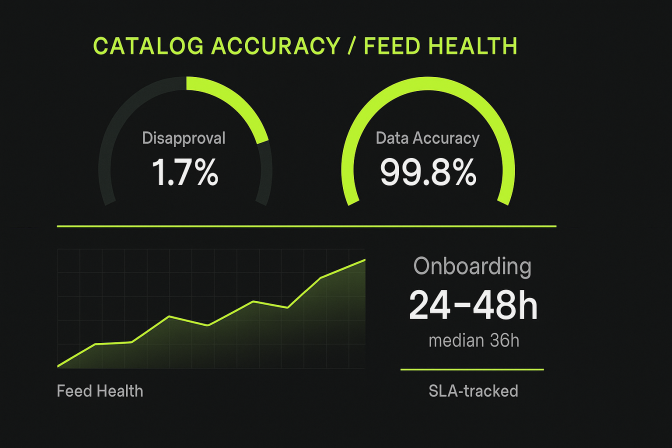
Every update is traceable with before/after diffs and rollback notes. Weekly dashboards track data accuracy, disapproval rates, and turnaround against targets. Access is least privilege and workflows are auditable end to end, so catalog operations stay predictable instead of reactive.
Data Standardization
Titles, attributes, and pricing normalized across SKUs, channels, and regions.
Image & Asset Cleanup
Background cleanup, basic retouching, and QA so images meet marketplace requirements.
Feed Validation
Pre-live QA against merchant policies with automated flags and human sign-off before launch.
Change Logs & QA
Versioned before/after logs, dual-layer QA, and SLA tracking to keep every change auditable.
Service Outcomes
- Clean, normalized product data across all active catalogs and marketplaces.
- Pre-live feed checks that catch policy and data issues before they reach Merchant Center.
- Versioned change logs for every update, with before/after views and audit trail.
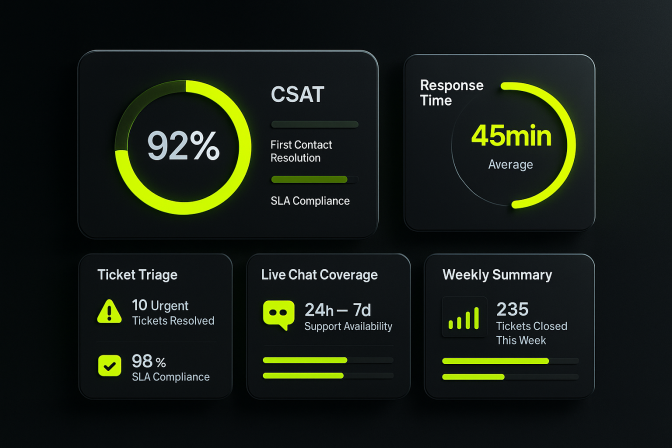
- Defined SLAs for turnaround and error handling, tracked on weekly dashboards.

How fast can Datqo onboard a new catalog?
Standard onboarding completes within 24–48 hours after access setup and sample review.
Do you support both B2C and B2B feeds?
We support both B2C and B2B feeds, with dedicated policies and marketplace-specific QA.
Can Datqo integrate with existing PIMs and DAMs?
Datqo integrates with existing PIM, DAM, and ERP systems via APIs or flat files, enabling integration without forced migration.
How does Datqo handle large-scale catalog updates?
Datqo uses incremental syncs and delta uploads so only changed SKUs are reprocessed. All updates are version-controlled, validated, and logged under SLA for full traceability.
Predictable, compliant product catalogs at scale. Automation handles mappings, normalization, and policy checks, while specialists review exceptions so every SKU, image, and attribute meets marketplace rules.
We integrate with your PIM/DAM/ERP via APIs or flat files and run pre-live feed validation to catch compliance issues before they reach Merchant Center. Incremental updates move only what changed.
Every update is traceable with before/after diffs and rollback notes. Weekly dashboards track data accuracy, disapproval rates, and turnaround against targets. Access is least privilege and workflows are auditable end to end, so catalog operations stay predictable instead of reactive.
Data Standardization
Titles, attributes, and pricing normalized across SKUs, channels, and regions.
Image & Asset Cleanup
Background cleanup, basic retouching, and QA so images meet marketplace requirements.
Feed Validation
Pre-live QA against merchant policies with automated flags and human sign-off before launch.
Change Logs & QA
Versioned before/after logs, dual-layer QA, and SLA tracking to keep every change auditable.
Service Outcomes
- Clean, normalized product data across all active catalogs and marketplaces
- Pre-live feed checks that catch policy and data issues before they reach Merchant Center
- Versioned change logs for every update, with before/after views and audit trail
- Defined SLAs for turnaround and error handling, tracked on weekly dashboards
How fast can Datqo onboard a new catalog?
Standard onboarding completes within 24–48 hours after access setup and sample review.
Do you support both B2C and B2B feeds?
Yes. We support both B2C and B2B feeds, with dedicated policies and marketplace-specific QA.
Can Datqo integrate with existing PIMs and DAMs?
Yes. We integrate with existing PIM, DAM, and ERP systems via APIs or flat files, enabling integration without forced migration.
How does Datqo handle large-scale catalog updates?
Datqo uses incremental syncs and delta uploads so only changed SKUs are reprocessed. All updates are version-controlled, validated, and logged under SLA for full traceability.